Prevent serious injuries with real-time PPE visibility
PPE detection is computer vision that checks, in real time, whether the people in a camera's view are wearing the protective equipment their zone requires — and flags the moment they are not.
PPE detection covers 12 real-time computer-vision use cases in the Intenseye detection & use case library — Apron, Eye protection, Face mask, Face shield, Gloves, Hard hat, Harness Detection, Hearing protection, Protective clothing, Reflective vest, RPE (Respiratory Protective Equipment) and Sleeves — on the cameras you already have or on Sentinel devices.
PPE isn’t just a policy—it’s the last line of defense between your team and life-altering incidents. Intenseye’s real-time PPE detection gives EHS professionals the visibility they need to stop risks from escalating into SIFs.
- Ensure critical PPE is worn where and when it matters most
- Act the moment protection is missing—not after an incident
- Use SIF-focused insights to reduce risk exposure
AI-powered PPE compliance
Out-of-box PPE AI models trained on real-world workplace scenarios to set the standard for precision and accuracy
Personal protective equipment is the last line of defense, and the hardest control to verify by walking the floor: a hard hat, a pair of gloves or a harness is either worn at the moment of exposure or it is not. PPE detection turns that check into a continuous one — every camera, every shift, every zone where the gear is mandatory.
Intenseye runs pre-trained PPE models on the CCTV you already own, or on Sentinel devices where a normal camera can't see. You set the rule per zone — which equipment, where and when it applies, down to color or fit — and the platform raises an alert the moment protection is missing, then tracks how often and where it happens so the root cause of non-compliance can be fixed.
12 use cases in this category
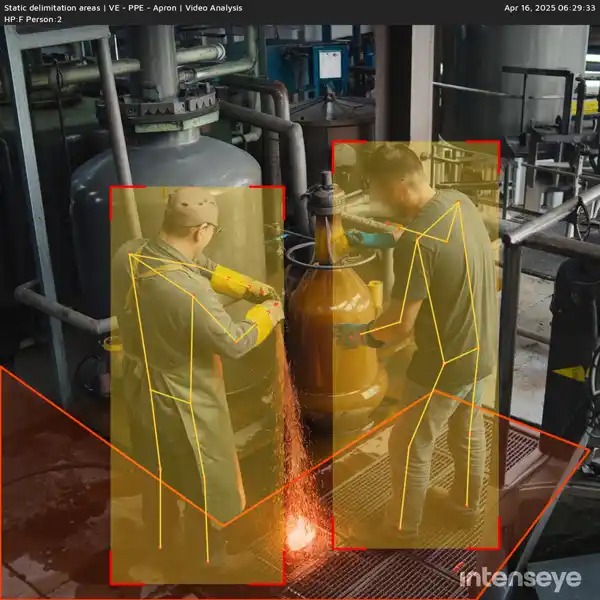
Apron
Checks that a protective apron is worn where splash, spark, or contamination hazards require it.
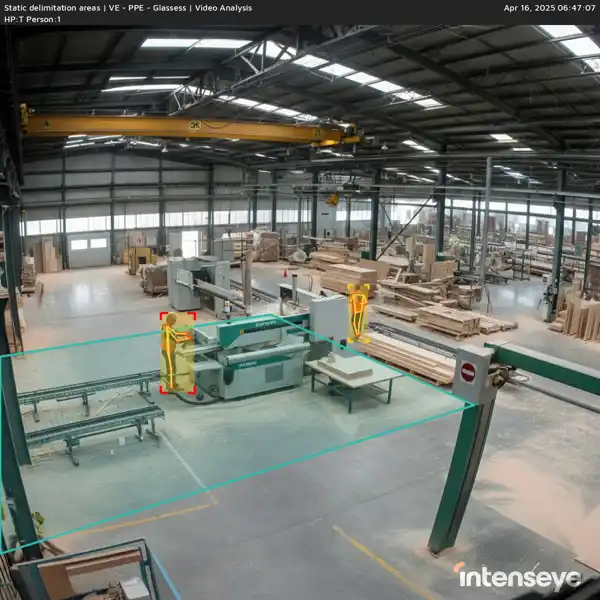
Eye protection
Confirms safety glasses or goggles are worn in zones where eye hazards are present.
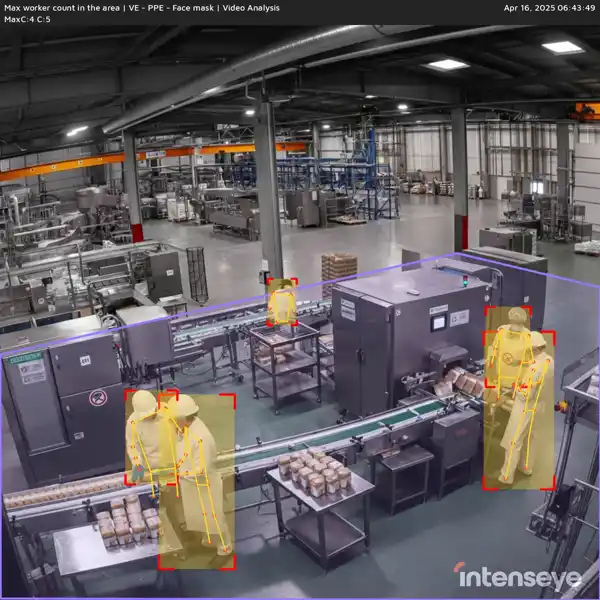
Face mask
Checks for a face mask or respirator covering where airborne or hygiene requirements apply.
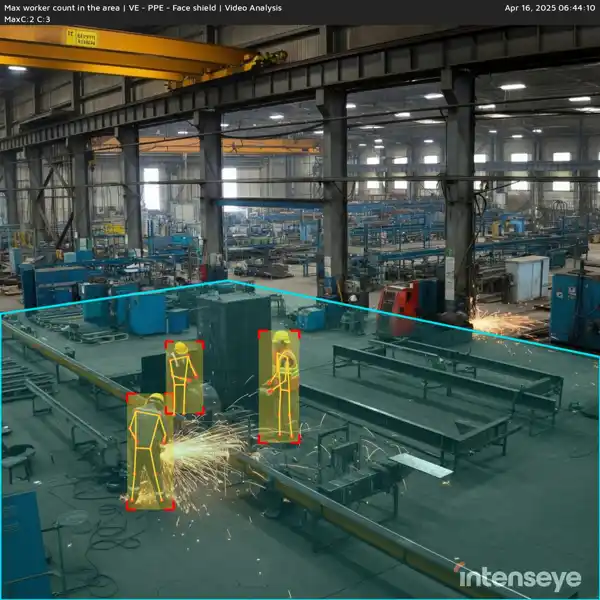
Face shield
Detects whether a full-face shield is worn during grinding, chemical handling, or other face-hazard tasks.
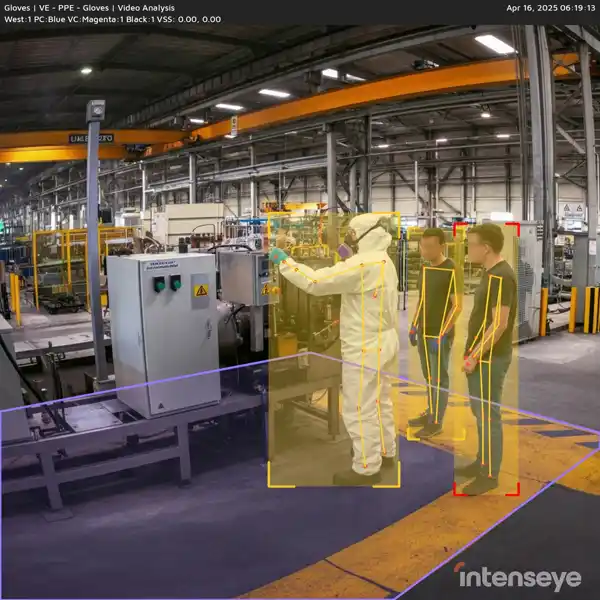
Gloves
Verifies task-appropriate gloves are worn where hand hazards or hygiene rules apply.
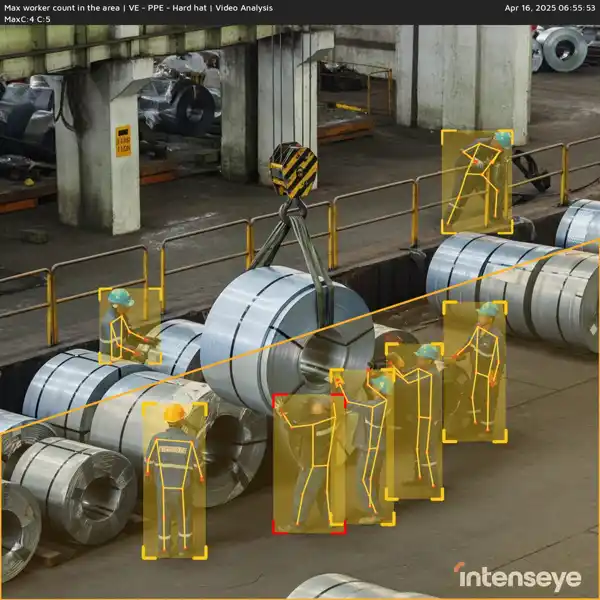
Hard hat
Detects whether a hard hat is worn in areas with overhead or struck-by risk.
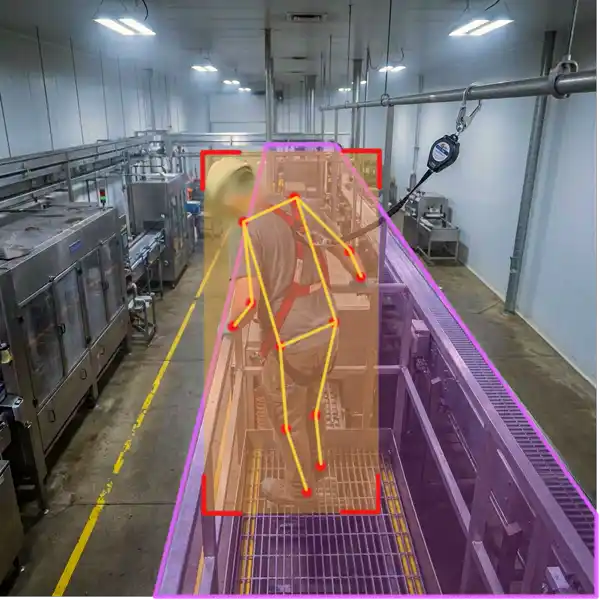
Harness Detection
Detects whether a fall-arrest harness is worn and connected when working at height.
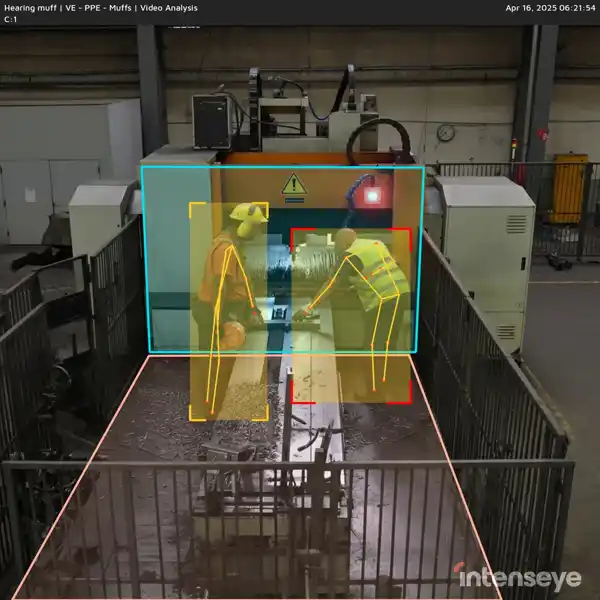
Hearing protection
Confirms ear plugs or muffs are worn in high-noise zones.
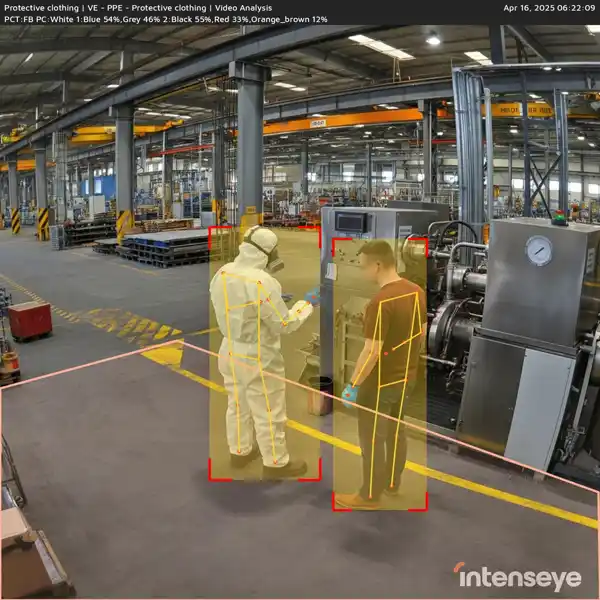
Protective clothing
Verifies required protective garments - coveralls, flame-resistant wear - are worn for the task.
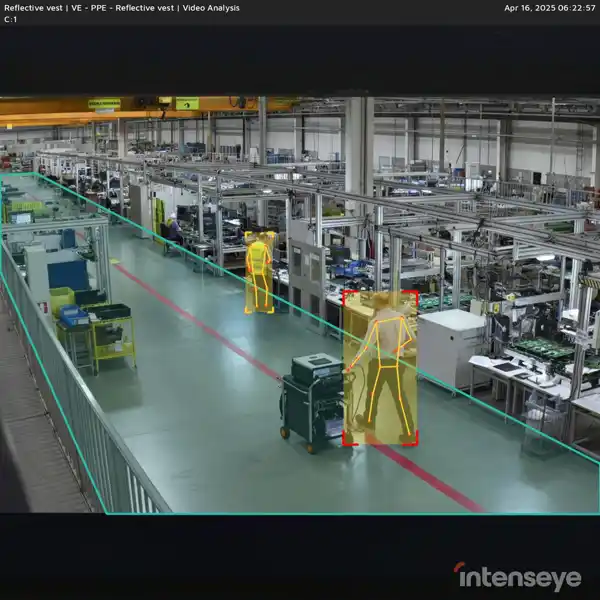
Reflective vest
Confirms a high-visibility vest is worn in vehicle and traffic zones.
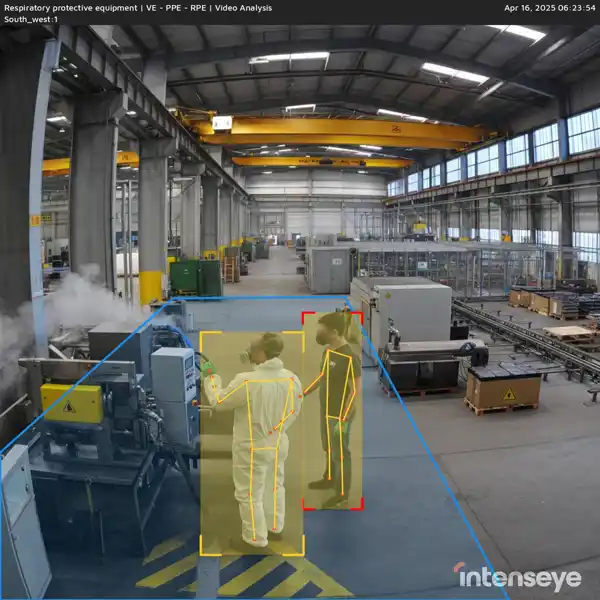
RPE (Respiratory Protective Equipment)
Detects whether required respiratory protection is worn where airborne contaminants are present.
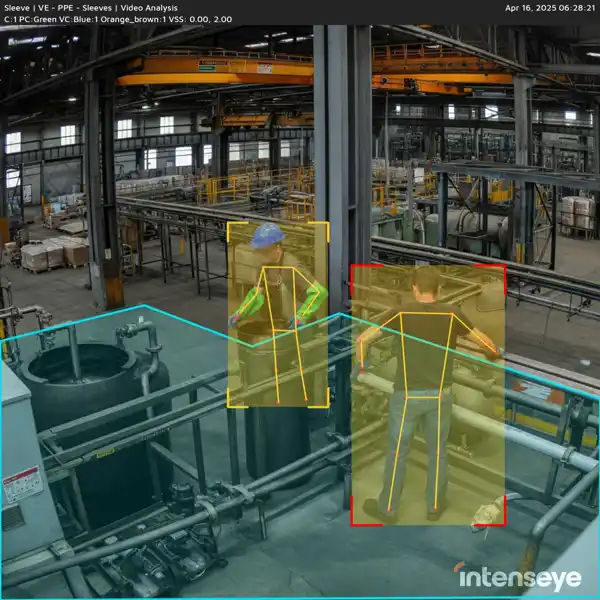
Sleeves
Checks that protective sleeves or arm guards are worn where cut, heat, or abrasion hazards exist.
Why it matters to EHS leaders
Prevent, don’t just detect
Uncover root causes of non-compliance and eliminate repeat issues with actionable insights.
Precision beyond basics
Set parameters like color, fit, or task-specific needs to ensure PPE accuracy in every context.
Built for complex operations
Ensure PPE compliance in high-risk, multi-zone environments with tailored, scalable solutions.
PPE detections across industries
The first three industries are open below; expand another to read how each use case applies on that floor — the same per-industry context the full library shows when you filter by industry.
Industrial Manufacturing11 use cases
- Apron
- Apron use in manufacturing reduces exposure to hot liquids, sharp edges, and surface contamination during material handling and chemical processing.
- Eye protection
- Safety glasses prevent eye injuries from particulate matter, dust, and projectile fragments in high-speed machining and cutting zones.
- Face mask
- Face masks protect against airborne particulates, dust, and fumes common in sanding, mixing, and polishing operations.
- Face shield
- Face shields protect manufacturing workers from flying debris, arc flash, and chemical splashes near grinding, welding, or chemical mixing stations.
- Gloves
- Gloves are essential in preventing lacerations, punctures, and chemical burns during component handling, assembly, and machine operation.
- Hard hat
- Hard hats prevent traumatic injuries caused by falling tools, parts, or crane-mounted hardware in overhead or multi-level workspaces.
- Hearing protection
- Hearing protection is critical in manufacturing areas with prolonged exposure to high-decibel machinery, preventing long-term hearing loss.
- Protective clothing
- Protective clothing reduces burn, abrasion, and chemical contact risks during high-heat, splash-prone, or corrosive operations.
- Reflective vest
- Reflective vests increase visibility and reduce struck-by risks near forklifts, AGVs, and mobile equipment inside facilities.
- RPE (Respiratory Protective Equipment)
- RPE ensures worker safety from inhalation of harmful dust, vapors, or fumes in confined or poorly ventilated manufacturing zones.
- Sleeves
- Protective sleeves help prevent abrasions and burns when working near hot pipes, sharp edges, or abrasive machinery.
Food and Beverage11 use cases
- Apron
- Aprons in food and beverage facilities protect against hot liquid splashes, oil burns, and contamination during cooking and mixing tasks.
- Eye protection
- Safety glasses prevent eye injuries from splashes of sanitizing chemicals and ingredients during processing and cleaning.
- Face mask
- Face masks help prevent airborne contaminant spread and exposure to powders or cleaning chemical residues.
- Face shield
- Face shields are essential for splash protection during high-pressure washdowns and chemical sanitation processes.
- Gloves
- Gloves protect hands from cuts during slicing, abrasion from packaging machinery, and contamination risks in food prep.
- Hard hat
- Hard hats safeguard workers from falling tools or equipment in elevated packaging, racking, or conveyor areas.
- Hearing protection
- Hearing protection is necessary in bottling, milling, or pneumatic systems that exceed safe noise thresholds.
- Protective clothing
- Protective clothing helps reduce contact with hot ovens, boiling fluids, and maintains hygiene standards.
- Reflective vest
- Reflective vests improve visibility in freezer loading zones and forklift routes in chilled distribution areas.
- RPE (Respiratory Protective Equipment)
- RPE protects against exposure to flour dust, allergenic particles, and sanitation fumes in enclosed processing areas.
- Sleeves
- Sleeves protect forearms from burns, cuts, and chemical contact in filling, sealing, and sanitization processes.
Automotive11 use cases
- Apron
- Aprons protect workers from battery acid, sharp component edges, and hot lubricants during sub-assembly or inspection tasks.
- Eye protection
- Safety glasses prevent eye injuries from flying metal, fluids, and shards during part trimming, machining, or fastener use.
- Face mask
- Face masks reduce inhalation of paint vapors, dust, and exhaust particles near sanding or spray booths.
- Face shield
- Face shields reduce exposure to grinding debris, battery acid splash, or arc flash during welding or battery prep.
- Gloves
- Gloves protect against cuts, burns, and exposure to solvents during panel installation, welding, and painting.
- Hard hat
- Hard hats protect workers from overhead components, dropped tools, or crane systems used in frame or engine mounting.
- Hearing protection
- Hearing protection prevents long-term hearing damage near stamping presses, air tools, and grinding bays.
- Protective clothing
- Clothing prevents skin exposure to chemicals, paint overspray, or hot metal during cutting and welding.
- Reflective vest
- Vests increase visibility near forklifts, AGVs, and test bays in multi-shift or dimly lit environments.
- RPE (Respiratory Protective Equipment)
- RPE protects against welding fumes, paint vapors, or heavy metal dust during chassis prep and repair work.
- Sleeves
- Protective sleeves reduce burns and abrasions when working inside engine bays, battery modules, or undercarriage areas.
Industrial Machinery11 use cases
- Apron
- Apron use in manufacturing reduces exposure to hot liquids, sharp edges, and surface contamination during material handling and chemical processing.
- Eye protection
- Safety glasses prevent eye injuries from particulate matter, dust, and projectile fragments in high-speed machining and cutting zones.
- Face mask
- Face masks protect against airborne particulates, dust, and fumes common in sanding, mixing, and polishing operations.
- Face shield
- Face shields protect manufacturing workers from flying debris, arc flash, and chemical splashes near grinding, welding, or chemical mixing stations.
- Gloves
- Gloves are essential in preventing lacerations, punctures, and chemical burns during component handling, assembly, and machine operation.
- Hard hat
- Hard hats prevent traumatic injuries caused by falling tools, parts, or crane-mounted hardware in overhead or multi-level workspaces.
- Hearing protection
- Hearing protection is critical in manufacturing areas with prolonged exposure to high-decibel machinery, preventing long-term hearing loss.
- Protective clothing
- Protective clothing reduces burn, abrasion, and chemical contact risks during high-heat, splash-prone, or corrosive operations.
- Reflective vest
- Reflective vests increase visibility and reduce struck-by risks near forklifts, AGVs, and mobile equipment inside facilities.
- RPE (Respiratory Protective Equipment)
- RPE ensures worker safety from inhalation of harmful dust, vapors, or fumes in confined or poorly ventilated manufacturing zones.
- Sleeves
- Protective sleeves help prevent abrasions and burns when working near hot pipes, sharp edges, or abrasive machinery.
Chemicals11 use cases
- Apron
- Aprons in chemical environments protect from corrosive liquid splashes during mixing, transferring, and emergency cleanup tasks.
- Eye protection
- Safety glasses protect against vapor splash, particulate exposure, and accidental chemical contact during inspections.
- Face mask
- Face masks help prevent inhalation of fine powders and non-volatile particulate matter during batching or dry chemical handling.
- Face shield
- Face shields reduce eye and face exposure to reactive chemical splashes during handling of acids and solvents.
- Gloves
- Gloves prevent skin absorption of hazardous substances and burns while working with corrosives and solvents.
- Hard hat
- Hard hats safeguard from overhead pipe impacts, valve drops, or structural hazards in chemical process areas.
- Hearing protection
- Hearing protection mitigates long-term auditory damage in areas near reactors, compressors, or agitation systems.
- Protective clothing
- Protective garments reduce burn and absorption risk during exposure to corrosive or reactive agents.
- Reflective vest
- Reflective gear increases visibility in low-light or emergency response conditions near tanks and forklifts.
- RPE (Respiratory Protective Equipment)
- RPE use is vital for preventing inhalation of airborne vapors and toxic mists in pressurized or open systems.
- Sleeves
- Sleeves reduce chemical contact and abrasion risks when reaching into containers or transfer lines.
Warehouses11 use cases
- Apron
- Aprons provide incidental protection during maintenance or cleaning tasks where splashes or sharp packaging may be encountered.
- Eye protection
- Glasses protect against airborne dust, loose debris, or wrapping particles in high-speed sortation and packaging zones.
- Face mask
- Masks help reduce inhalation of particulate matter in dust-prone loading zones or while breaking down packaging.
- Face shield
- Face shields are vital for protection during battery maintenance, shrink-wrapping, or spill cleanup involving splashes or projectiles.
- Gloves
- Gloves reduce hand injuries from sharp pallet edges, strapping tools, and repeated contact during loading/unloading.
- Hard hat
- Hard hats reduce the risk of head injuries from falling packages or tools when working in multi-tier storage systems.
- Hearing protection
- Hearing protection prevents long-term hearing damage in loud environments such as compressor areas or near high-volume conveyors.
- Protective clothing
- Protective clothing helps shield workers from abrasive contact with cardboard, pallets, or minor spills.
- Reflective vest
- Reflective vests are critical for visibility in mixed pedestrian-forklift zones to prevent struck-by incidents.
- RPE (Respiratory Protective Equipment)
- RPE is used during cleaning, spill response, or exposure to fumes near battery charging stations.
- Sleeves
- Sleeves protect workers’ arms from cuts and abrasions when handling sharp-edged or tightly packed materials.
Metals & Steel11 use cases
- Apron
- Aprons protect workers from molten splash, slag, and radiant heat during furnace operations and welding tasks.
- Eye protection
- Safety glasses prevent eye injuries from sparks, scale, and shavings during cutting, forming, and hot work.
- Face mask
- Protects from metal dust and fumes created during grinding, blasting, and thermal cutting operations.
- Face shield
- Face shields are essential to prevent eye and facial burns from arc flash, flying slag, or abrasive grinding.
- Gloves
- Heavy-duty gloves reduce risk of lacerations and burns when handling hot metal, sharp parts, or abrasive surfaces.
- Hard hat
- Protects from falling tools or structural components near cranes, presses, and overhead catwalks.
- Hearing protection
- Required in forging, stamping, or press lines to prevent hearing damage from prolonged high-decibel exposure.
- Protective clothing
- Flame-resistant clothing protects against heat, fire, and molten material splash during smelting and forging.
- Reflective vest
- Enhances visibility in dim or smoky environments around cranes, forklifts, or transport trolleys.
- RPE (Respiratory Protective Equipment)
- RPE protects from fine metal particulates and welding fumes that pose long-term respiratory hazards.
- Sleeves
- Sleeves protect from high radiant heat and sharp edges on freshly formed metal sheets or billets.
Building Materials11 use cases
- Apron
- Aprons provide protection against concrete splatter, dust, or abrasive debris during mixing, batching, or sanding tasks.
- Eye protection
- Safety glasses prevent eye injuries from airborne dust, chipping stone, and debris near saws, kilns, and mixers.
- Face mask
- Masks reduce dust inhalation from sand, fly ash, or dry cement during batching or raw material transfer.
- Face shield
- Shields reduce facial injury risk during grinding, high-pressure washing, or cutting cementitious products.
- Gloves
- Gloves protect hands from sharp rebar, coarse materials, and caustic substances used in cement and mortar production.
- Hard hat
- Protects workers from head injuries caused by falling materials from silos, cranes, or upper-tier pallet stacks.
- Hearing protection
- Hearing protection mitigates exposure to high-decibel crushers, concrete mixers, or saws.
- Protective clothing
- Protective gear safeguards against alkaline splashes, abrasives, and cuts in aggregate handling areas.
- Reflective vest
- Enhances visibility near forklifts, crane rigs, and outdoor loader operations on dusty or busy job floors.
- RPE (Respiratory Protective Equipment)
- RPE protects from silica dust inhalation during cutting, mixing, or powder transfer in block or cement production.
- Sleeves
- Sleeves protect arms from abrasions, contact with rough aggregates, or sharp metal frames during reinforcement placement.
Containers Packaging and Paper11 use cases
- Apron
- Aprons provide splash and abrasion protection during adhesive application, dyeing, or mechanical cleaning operations.
- Eye protection
- Safety glasses prevent eye injuries from paper shards, ink mist, or flying packaging debris near cutters and feeders.
- Face mask
- Prevents inhalation of paper dust and fiber particulate in slitting, rewinding, or die-cutting areas.
- Face shield
- Shields protect from paper dust, glue spray, and fast-moving fibers in coating or binding stations.
- Gloves
- Gloves protect hands from sharp paper edges, hot rollers, or chemicals in printing and corrugation zones.
- Hard hat
- Reduces risk of head injuries from falling packaging rolls or tools during machine maintenance or stacking.
- Hearing protection
- Necessary in areas with high-speed rollers, slitters, and printing presses where decibel levels exceed safe limits.
- Protective clothing
- Protects skin from adhesive contact, cutting residue, and hot surfaces near lamination or embossing units.
- Reflective vest
- Enhances visibility in print halls and roll transfer areas where lift trucks and pallet jacks operate frequently.
- RPE (Respiratory Protective Equipment)
- RPE protects against exposure to volatile ink fumes, coatings, or cleaning solvents used in converting processes.
- Sleeves
- Arm sleeves reduce abrasion or minor laceration risk during manual loading of paper webs or die inserts.
Air Cargo, Logistics & Transportation11 use cases
- Apron
- Aprons provide minimal protection but may assist in reducing exposure to abrasions or debris during container handling and belt loader operations.
- Eye protection
- Glasses prevent eye injuries from dust, cargo wrap recoil, or stray packaging materials during aircraft or truck loading.
- Face mask
- Helps prevent inhalation of dust, exhaust, and packaging debris in cargo sortation hubs and ramp-side operations.
- Face shield
- Face shields protect workers during battery swaps, liquid cargo inspection, or de-icing chemical exposure from splash and particulate.
- Gloves
- Gloves protect hands from cargo strapping cuts, friction burns, and sharp pallet or ULD edge contact.
- Hard hat
- Critical for preventing head injuries in cargo bays, container storage areas, or when working beneath lift gates and aircraft bellies.
- Hearing protection
- Reduces risk of hearing loss from exposure to aircraft engines, belt loaders, and diesel tugs in airside zones.
- Protective clothing
- Garments protect against abrasion and help workers stay visible and safe during aircraft loading or trailer operations.
- Reflective vest
- Reflective vests are essential for visibility near moving aircraft, ground vehicles, and loading docks, especially at night.
- RPE (Respiratory Protective Equipment)
- RPE provides protection from aircraft fumes, brake dust, and cargo off-gassing during inspections or closed-container handling.
- Sleeves
- Sleeves reduce arm injuries when maneuvering heavy cargo, pushing ULDs, or handling straps and trolleys in tight zones.
PPE safety in action
Runs on the CCTV you already own. No rip-and-replace. Add Sentinel devices only where a normal camera can't see - low light, heat, depth, or outdoor.
Detect
Customize AI models to identify industry-standard PPE specific to your operational needs.
Act
Act on real-time alerts and AI-driven insights to address compliance gaps proactively.
Protect
Track the impact of your actions and safeguard your team by minimizing exposure to hazards.
Related terms
PPE (Personal Protective Equipment)
A group of AI scenarios that monitor whether workers are wearing the required protective gear - hard hats, vests, gloves, glasses - in the zones where it is mandatory.
Unsafe act
A behavior that deviates from safe procedure - bypassing a guard, skipping PPE, entering a restricted zone.
SIF — Serious Injury or Fatality
An incident resulting in severe harm or death. SIF prevention is the primary goal of Intenseye’s detection capabilities. The platform focuses on identifying pSIF events - the precursors - before they become SIF outcomes.
Safety Compliance
A 0-100 score measuring how well safety protocols are being followed across your plants. Calculated as the percentage of monitored time your workforce operated within safety rules, based on compliance use cases (PPE, behavior, vehicle, housekeeping).
Object Detection
A computer vision task that locates and identifies specific objects within an image or video, such as forklifts, pedestrians, or protective equipment.
Real-Time Detection
The ability to identify and respond to a condition as it happens, rather than reviewing footage after the fact.
How AI can make PPE detection?
AI enables PPE (Personal Protective Equipment) detection through computer vision technology. Trained on extensive datasets, AI algorithms recognize various PPE items such as helmets, safety vests, goggles, and gloves. This allows for real-time analysis of images or video footage, accurately identifying instances of PPE even in complex environments. Moreover, AI can classify the type of equipment detected, enhancing specificity.
Integrated into existing safety management software, AI-powered PPE detection ensures seamless tracking of safety compliance across different settings. With continuous analysis, AI provides real-time alerts for non-compliance, enabling immediate intervention to address safety violations and mitigate risks
How AI can improve PPE safety?
AI safety software modernizes PPE detection, saving time and boosting compliance. Despite the prevalence of manual detection, AI-driven solutions are critical in preventing workplace injuries. OSHA highlights that correct PPE usage can prevent 38% of work-related injuries, underlining its importance.
Here's how AI-driven safety software transforms safety management: Enhanced Compliance ensures adherence to safety standards by automatically detecting PPE non-compliance. Real-time Analysis provides immediate insights for corrective actions. Data-driven Insights identify trends to enhance safety.
Cost Savings result from reduced claims and downtime. Automated Documentation streamlines reporting for compliance. Moreover, seamless Integration with existing systems enhances efficiency.
What kinds of EHS scenarios can be set up as a rule on your platform?
Within our safety management software, a variety of Core AI features can be activated to detect unsafe acts and conditions in your workplace.
The PPE detection model can be used to ensure a safe working environment by detecting the use of Helmet, Glove, Apron, Sleeve, Respiratory Protective Equipment, Reflective Vest, and Glasses.
The Area Controls model can be used to ensure working areas in your facility are always safe with various EHS scenarios such as establishing worker minimum and maximums, preventing workers from entering restricted areas, and minimizing occupational exposures through time limits.
The Housekeeping model can be used to reduce the risks of slips, trips, falls and collisions by ensuring that vehicle paths and pedestrian walkways in your facility are always clear and safe.
The Vehicle Controls model can be used to manage your workplace traffic safety by ensuring the safe operation of vehicles at your workplace.
The Behavioral Safety model can be used to avoid the line of fire injuries such as pedestrians in vehicle paths, nonuse of handrails, and violations of working at heights.
The Pandemic Control Measures model can be used to prevent contagious diseases by ensuring social distancing as well as proper mask use.
The Emergency Alerts can be used to get immediate notifications in situations such as when a worker falls on the ground or there is a fire-related emergency.
What’s more, with Ergonomics AI, our system detects risky actions for the body and prompts the managers to take the situation under control before any hazardous conditions arise. A variety of use cases can be set up as a rule under our ergonomics software to detect unsafe body movements, which are Trunk Position, Trunk Twisted Position, Trunk Side Bending Position, Lower Arm Position, Upper Arm Position, Neck Position, Neck Bending Position, and Arm Working Position.
How does the system send an alert when an unsafe situation is observed?
When there is an unsafe act or condition, an image and a 12-second video of that moment are displayed on the platform. It is sent as a real-time notification in the form of SMS or email to the EHS specialists.
Explore the other categories
See the use cases in action on your floor
Reduce your safety risk today.