Prevent BBS-related SIFs by understanding root causes
Behavior-based safety (BBS) detection is computer vision that spots unsafe acts — climbing, running, working at height, crowding, unsafe proximity — as they happen, so teams see the pattern rather than the person.
Behavior-based safety detection covers 8 real-time computer-vision use cases in the Intenseye detection & use case library — Climbing, Crowding risk, Electrical contact zone, Three points of contact, Unsafe running, Walkway compliance, Worker proximity and Working at heights — on the cameras you already have or on Sentinel devices.
Every unsafe action signals deeper risks—systemic flaws, or environmental challenges. Intenseye’s Behavioral Safety surfaces these patterns in real time, helping teams reduce SIF exposure without placing blame.
- Address site risks without singling out individuals
- Spot leading indicators to act before SIFs occur
- Turn reactive fixes into proactive prevention
AI-powered behavioral safety
Pre-trained AI models built for behavioral safety, trained on diverse workplace scenarios, and operating 24/7 to detect risks objectively and in real time.
Behavior-based safety has always depended on observations: someone watching the floor, noting an unsafe act and feeding it back. Observers can't be everywhere, and what they record depends on who is watching. BBS detection makes the observation continuous and objective — the same unsafe acts, spotted the same way, on every camera, around the clock.
Intenseye's pre-trained behavioral models run on your existing cameras or on Sentinel devices and detect unsafe acts in real time: climbing, unsafe running, walkway compliance, three points of contact, working at heights, worker proximity and crowding. Alerts and trends are reported without singling out individuals, so the output is a picture of where and when unsafe acts cluster — the root causes a BBS program exists to fix.
8 use cases in this category
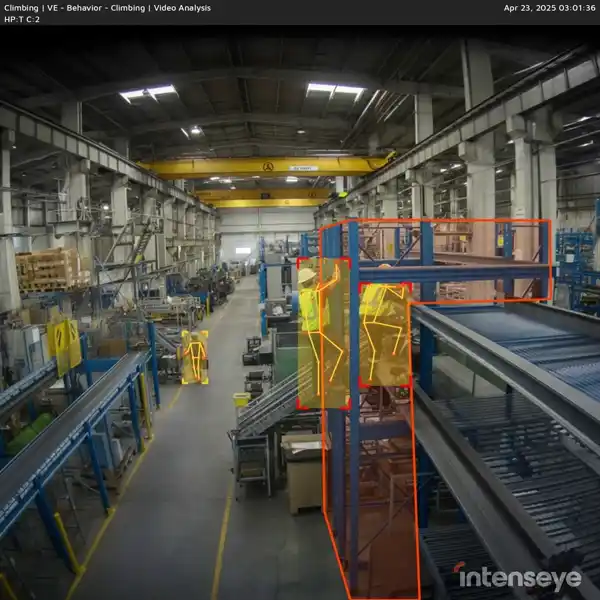
Climbing
Detects a worker climbing racking, equipment, or structures instead of using proper access.
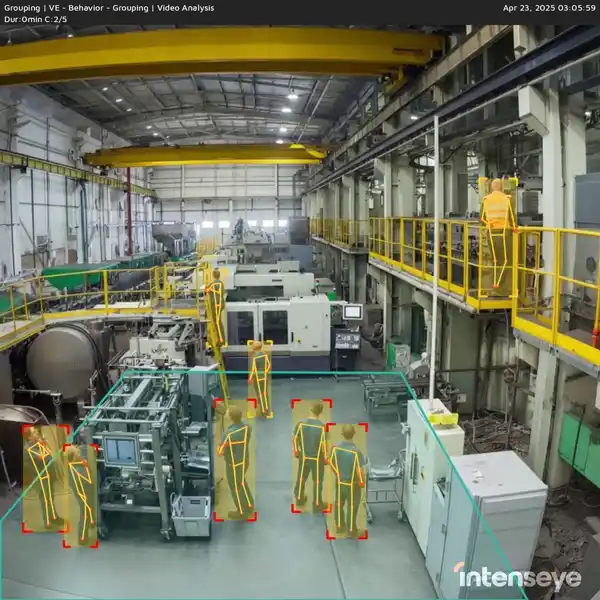
Crowding risk
Flags when too many people gather in a confined space at the same time.
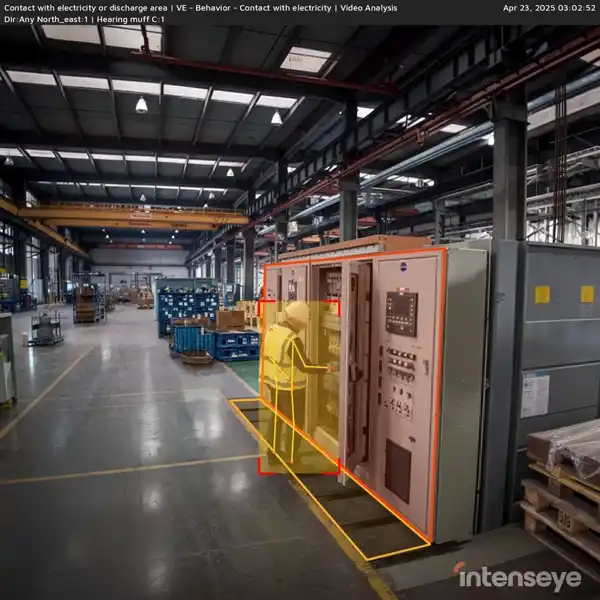
Electrical contact zone
Detects entry into a zone where contact with live electrical hazards is possible.
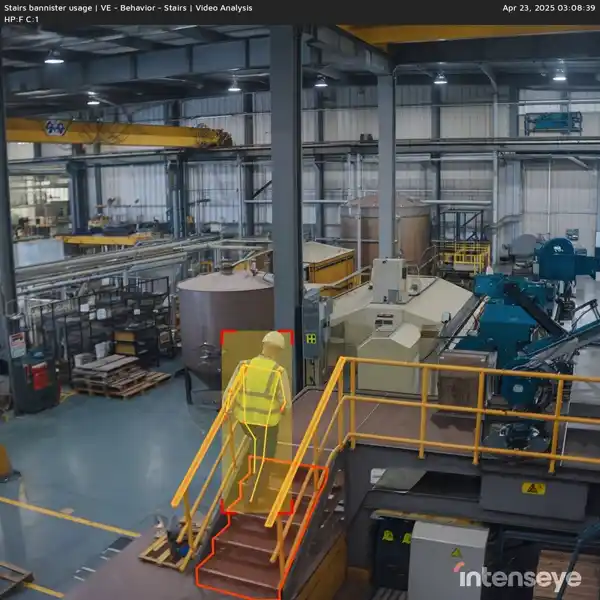
Three points of contact
Checks that ladders and steps are used with three points of contact maintained.
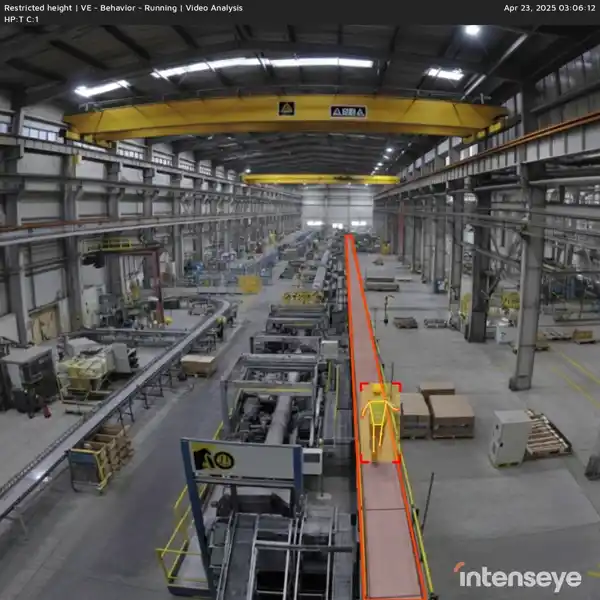
Unsafe running
Flags running in areas where it creates a slip or collision risk.
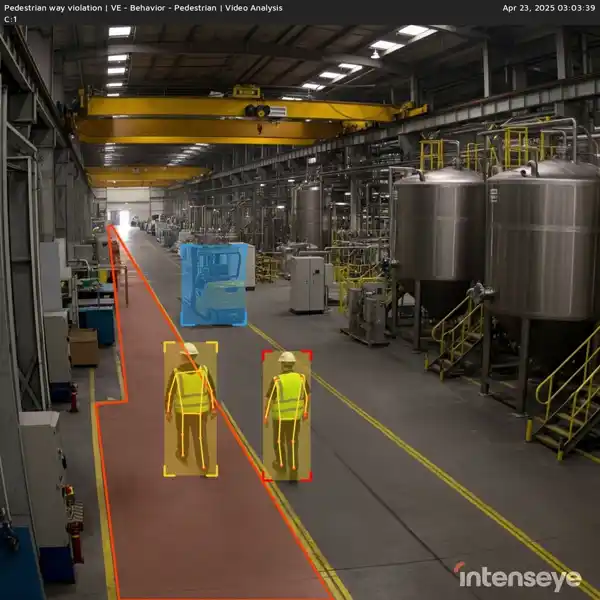
Walkway compliance
Confirms workers stay within designated pedestrian walkways.
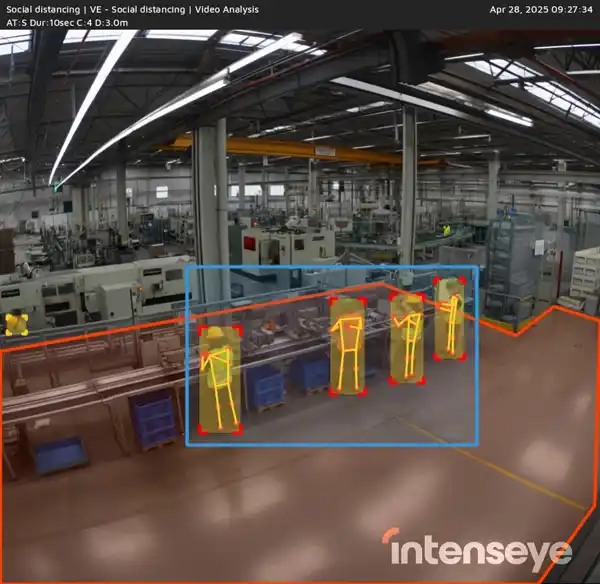
Worker proximity
Detects when workers come dangerously close to a hazard or to one another.
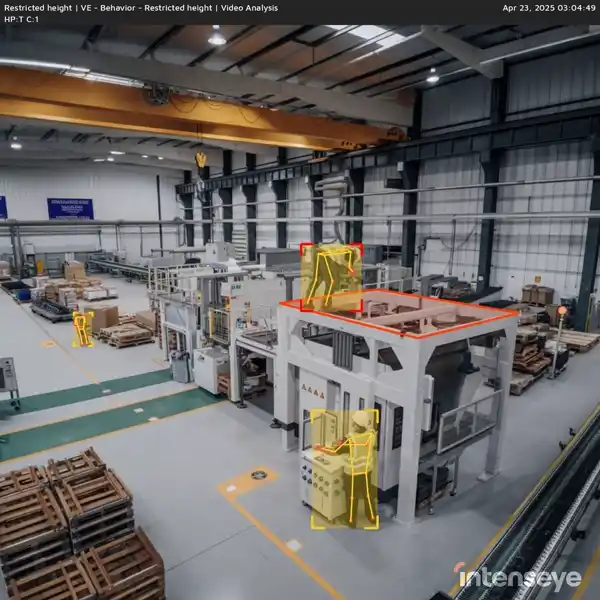
Working at heights
Detects elevated work and whether fall-protection conditions are met.
Why it matters to EHS leaders
Blame-free safety culture
Uncover behavior trends without assigning individual fault, creating a collaborative environment where safety comes first.
Eliminate observer bias
Let AI objectively detect unsafe behaviors, delivering unbiased insights and removing human subjectivity from safety observations.
Adaptive safety
Set group size limits, PPE requirements, and duration thresholds while customizing BBS observations to fit your safety needs.
Behavioral Safety detections across industries
The first three industries are open below; expand another to read how each use case applies on that floor — the same per-industry context the full library shows when you filter by industry.
Industrial Manufacturing8 use cases
- Climbing
- Detecting unsafe climbing behavior prevents falls from stacked materials, racks, or machinery platforms.
- Crowding risk
- Overcrowding near hazardous zones or narrow aisles increases collision and exposure risks during operations.
- Electrical contact zone
- Detects unprotected interaction with panels or terminals, preventing shocks or arc flash injuries.
- Three points of contact
- Ensures safe stair descent with handrail use, reducing fall risk in multi-level facilities.
- Unsafe running
- Detects unsafe running in production areas where spills, machinery, or obstacles pose tripping risks.
- Walkway compliance
- Detects workers outside designated walkways to reduce struck-by incidents with forklifts or carts.
- Worker proximity
- ↔️ Maintains spacing compliance to reduce viral transmission and uphold hygiene protocols.
- Working at heights
- Identifies unsafe access above rated height to prevent falls and dropped object injuries.
Food and Beverage8 use cases
- Climbing
- Prevents unsafe climbing on stacked trays, freezer shelving, or conveyors during unblocking or retrieval tasks.
- Crowding risk
- Reduces crowding in bottleneck areas near sorters, mixers, or during shift changes to lower collision risk.
- Electrical contact zone
- Detects workers accessing energized panels in damp or washdown-prone environments.
- Three points of contact
- Ensures safe stair use during rush periods or in cold/wet environments to reduce slips and falls.
- Unsafe running
- Detects unsafe running in wet or greasy floor zones like kitchens, bottling, or raw material transfer corridors.
- Walkway compliance
- Identifies walk path deviations near live conveyors or freezer vehicle lanes to reduce collision or falls.
- Worker proximity
- ↔️ Maintains spacing in shared prep, break, or gowning areas to prevent illness spread.
- Working at heights
- Alerts to workers operating above safe height limits near fermenters, hoppers, or racking systems.
Automotive8 use cases
- Climbing
- Detects workers climbing on shelves, bumpers, or inside vehicles, risking falls or damage.
- Crowding risk
- Prevents excessive personnel crowding around torque zones, weld bays, or diagnostic stations where space is limited.
- Electrical contact zone
- Detects unprotected access to EV battery terminals or high-voltage equipment.
- Three points of contact
- Ensures safe stair navigation in multi-level facilities like mezzanine battery assembly or offices.
- Unsafe running
- Detects workers running through production areas with fluids, trip hazards, or automated movement.
- Walkway compliance
- Identifies workers outside walking paths in areas shared with forklifts or automated guided vehicles.
- Worker proximity
- ↔️ Maintains distance in shared breakrooms, shift change zones, or torque training stations.
- Working at heights
- Detects unsafe elevation or standing on parts bins or platforms not designed for access.
Industrial Machinery8 use cases
- Climbing
- Detecting unsafe climbing behavior prevents falls from stacked materials, racks, or machinery platforms.
- Crowding risk
- Overcrowding near hazardous zones or narrow aisles increases collision and exposure risks during operations.
- Electrical contact zone
- Detects unprotected interaction with panels or terminals, preventing shocks or arc flash injuries.
- Three points of contact
- Ensures safe stair descent with handrail use, reducing fall risk in multi-level facilities.
- Unsafe running
- Detects unsafe running in production areas where spills, machinery, or obstacles pose tripping risks.
- Walkway compliance
- Detects workers outside designated walkways to reduce struck-by incidents with forklifts or carts.
- Worker proximity
- ↔️ Maintains spacing compliance to reduce viral transmission and uphold hygiene protocols.
- Working at heights
- Identifies unsafe access above rated height to prevent falls and dropped object injuries.
Chemicals8 use cases
- Climbing
- Detects unsafe climbing on piping racks, intermediate bulk containers (IBCs), or tank ladders, preventing fall incidents and chemical splash risks.
- Crowding risk
- Detects excessive personnel in lab or batch areas where crowding can delay emergency egress or increase exposure during releases.
- Electrical contact zone
- Detects unsafe access to control panels or power supply areas in wet or high-risk zones to prevent electrocution during chemical operations.
- Three points of contact
- Ensures handrail use on chemical plant stairs, especially in slick or elevated access areas to reduce fall risk.
- Unsafe running
- Detects unsafe running in chemical plants near tank farms or narrow aisles where spills and restricted access zones increase slip and collision risk.
- Walkway compliance
- Detects deviation into spill-prone or high-volume transfer areas where slip and splash risks are elevated.
- Worker proximity
- ↔️ Reinforces distancing protocols in control rooms, shift handoffs, and labs to prevent viral transmission and maintain workforce availability.
- Working at heights
- Identifies unsafe activity above rated platforms near tank tops or catwalks, preventing falls and overexposure.
Warehouses8 use cases
- Climbing
- Identifies workers climbing racking or pallets to retrieve goods, helping prevent serious fall injuries.
- Crowding risk
- Prevents congestion around dock doors, break areas, or tight aisles where visibility and maneuverability are compromised.
- Electrical contact zone
- Detects unsafe access to electrical panels near equipment charging areas, preventing shocks.
- Three points of contact
- Detects workers not using handrails on mezzanines or stair platforms, increasing fall risk.
- Unsafe running
- Detects unsafe running behavior near staging areas or packaging lines where falls and collisions can occur.
- Walkway compliance
- Detects workers walking in active forklift lanes or crossing into prohibited zones without clearance.
- Worker proximity
- ↔️ Reinforces safe spacing protocols near time clocks, break areas, and during shift transitions to limit exposure.
- Working at heights
- Flags unsafe reaching or standing on boxes or ladders in tall shelf areas to prevent fall incidents.
Metals & Steel8 use cases
- Climbing
- Detects unsafe climbing on stockpiles, furnaces, or overhead beams that could lead to fatal falls.
- Crowding risk
- Limits grouping near hazardous forming, loading, or material feed lines where congestion leads to injury.
- Electrical contact zone
- Detects entry into energized panels or control stations during live electrical or induction maintenance.
- Three points of contact
- Encourages safe descent from overhead gantries, stair platforms, or casting towers using handrails.
- Unsafe running
- Flags unsafe running in debris-prone or molten metal transport zones where footing is unstable.
- Walkway compliance
- Identifies entry into crane lanes or loader routes outside of designated pedestrian paths.
- Worker proximity
- ↔️ Maintains spacing in shared lunch areas, control rooms, and locker zones to limit viral spread.
- Working at heights
- Prevents access to overhead workspaces like ladle bridges or crane rails without proper fall protection.
Building Materials8 use cases
- Climbing
- Flags unsafe climbing on stacked cement bags, mold shelves, or aggregate hoppers without fall protection.
- Crowding risk
- Limits team congestion near mold stripping areas, palletizing stations, or sand delivery belts.
- Electrical contact zone
- Prevents electrical access during equipment maintenance where moisture or dust may create arc flash risk.
- Three points of contact
- Encourages safe stair usage in multi-tier facilities like silos, press bays, or kiln access decks.
- Unsafe running
- Prevents trip hazards and slips from running across dust-covered, uneven, or gravel production floors.
- Walkway compliance
- Identifies foot traffic in live loader or dump truck lanes near weigh stations or outdoor yards.
- Worker proximity
- ↔️ Reinforces safe spacing near time clocks, indoor breakrooms, or training stations to support wellness and compliance.
- Working at heights
- Detects unsafe elevation on batch towers, stairs without rails, or load platforms during operation.
Containers Packaging and Paper8 use cases
- Climbing
- Detects workers climbing on machines or racking to load rolls or align feeders, risking falls or entrapment.
- Crowding risk
- Prevents excessive gathering near output conveyors, scrap chutes, or collating zones where movement is constrained.
- Electrical contact zone
- Flags unsafe access to energized panels during troubleshooting of print or winding systems.
- Three points of contact
- Promotes use of stair handrails near elevated platforms, catwalks, or tensioner bridges.
- Unsafe running
- Flags running in tight packaging lanes or print lines where slips and collisions can result in injury.
- Walkway compliance
- Detects deviation from safe walking paths into zones where stackers or forklifts operate.
- Worker proximity
- ↔️ Maintains safe spacing in control areas and shift overlaps to support hygiene and emergency movement.
- Working at heights
- Detects overhead work without harness near storage racks or web tensioning platforms.
Air Cargo, Logistics & Transportation8 use cases
- Climbing
- Detects unsafe climbing on pallets, cargo containers, or racks to retrieve items, risking falls or entrapment.
- Crowding risk
- Flags congestion near security screening, x-ray machines, or belt ends where movement is limited and hazards increase.
- Electrical contact zone
- Detects access to energized control panels or chargers near forklifts or aircraft service equipment.
- Three points of contact
- Reinforces safe stairway descent in terminal loading levels or access ladders on tugs and loaders.
- Unsafe running
- Detects dangerous running behavior in congested sortation belts, hangars, or airport ramps.
- Walkway compliance
- Detects entry into vehicle or tug lanes instead of marked pedestrian paths in airside or warehouse zones.
- Worker proximity
- ↔️ Enforces spacing at shift change, locker areas, and dispatch points to reduce viral or ergonomic exposure.
- Working at heights
- Detects unpermitted elevation or ladder use near aircraft fuselages, mezzanines, or stacking areas.
Behavioral safety in action
Runs on the CCTV you already own. No rip-and-replace. Add Sentinel devices only where a normal camera can't see - low light, heat, depth, or outdoor.
Detect
Configure AI models to identify unsafe actions and systemic risks based on your workplace needs.
Act
Use real-time alerts and actionable insights to address risks and solve root causes at problem areas.
Protect
Foster a safer workplace by continuously improving safety measures and preventing incidents.
Related terms
BBS
Behavior-Based Safety - a program that observes and reinforces safe behaviors.
Unsafe act
A behavior that deviates from safe procedure - bypassing a guard, skipping PPE, entering a restricted zone.
Precursor
An early signal - an unsafe act or condition - that reliably precedes serious incidents.
Near-miss
An unplanned event that did not result in injury or damage but easily could have. Near-misses are leading signals - catching them is a chance to fix a hazard before it causes harm.
Leading Indicator
A proactive metric that tracks risk before an incident occurs - such as hazard detection frequency, tasks created, or coaching sessions completed. Intenseye is built around leading indicators: catching problems before they become incidents.
Safety Observation
A recorded note of a safe or unsafe behavior or condition, used to build a picture of risk and reinforce safe practice.
Pose Estimation
A computer vision technique that identifies the position of a person's body and joints, used to recognize postures and movements linked to risk.
What are the 7 steps in the behavior-based safety process?
The 7 steps in the behavior-based safety (BBS) process include:
1. Observation: Analyze unsafe behaviors.
2. Identification: Recognize the root causes of unsafe behaviors or conditions.
3. Data Collection: Gather data.
4. Analysis: Analyze data for patterns and trends.
5. Feedback: Provide feedback on observed behaviors.
6. Training: Offer targeted training to address issues.
7. Continuous Improvement: Implement changes and track progress.
Intenseye utilizes computer vision to enhance behavior-based safety (BBS) processes by continuously analyzing work environments and identifying unsafe behaviors in real-time. As a complete safety management software, it detects BBS cases. Some BBS examples are climbing in restricted areas, contact with hazardous equipment, grouping, pedestrian way violation, exceeding height restrictions, and failure to use handrails on stairs.
By providing proactive alerts and insights to workers and supervisors, EHS management software helps prevent safety incidents, reduce injuries, and improve overall safety performance in the workplace.
What’s the best way of working at heights?
When working at heights, safety is paramount. To ensure a secure environment, thorough risk assessments should be conducted beforehand to identify potential hazards like unstable surfaces or adverse weather conditions. Workers must receive comprehensive training on safety equipment usage and emergency protocols.
Regular equipment inspections are vital for detecting any issues that may compromise safety. Open communication among workers fosters awareness of hazards and encourages adherence to safety procedures.
Lastly, organizations should have robust emergency plans in place to respond promptly to any incidents. By prioritizing these measures, the risks associated with working at heights can be minimized, ensuring the well-being of workers.
Do you need 3 points of contact on a platform ladder?
Maintaining three points of contact on a platform ladder is crucial for stability and preventing falls, which means always having two hands and one foot or two feet and one hand in contact with the ladder.
Leveraging Intenseye’s AI-powered EHS management software can significantly enhance adherence to the three points of contact rule. The software continuously analyzes frontline employees in real-time, identifying and flagging unsafe ladder practices. In one scenario, our Safety AI detected frequent violations of this rule, prompting one of our customers to implement targeted safety training and install additional signage. These measures resulted in a remarkable 92% reduction in unsafe behaviors, showcasing the software's effectiveness in promoting a safer working environment.
How can you prevent climbing injuries with AI?
Implementing AI to prevent climbing injuries in workplaces involves a multi-faceted approach leveraging machine learning algorithms and sensor technology.
Firstly, AI can analyze historical data on climbing incidents to identify patterns and risk factors, allowing for the development of predictive models to anticipate potential accidents.
Secondly, real-time analysis using AI can identify climbers' movements and detect deviations from safe practices, providing immediate feedback and notifying both workers and supervisors.
Implementing AI to prevent climbing injuries in workplaces involves a multi-faceted approach leveraging machine learning algorithms and sensor technology. Firstly, AI can analyze historical data on climbing incidents to identify patterns and risk factors, allowing for the development of predictive models to anticipate potential accidents. Secondly, real-time analysis using AI can identify climbers' movements and detect deviations from safe practices, providing immediate feedback and notifying both workers and supervisors.
Intenseye’s safety management software easily spots a worker climbing onto shelves and prevents safety incident.
Can any workers who engage in unsafe acts and conditions be identified upon request?
No, they cannot be identified. We don’t intend to create a reward/punishment system for the workers. Rather, it is intended to reveal areas requiring improvement in the facility. We focus on what issues need to be developed in the facility.
Explore the other categories
See the use cases in action on your floor
Reduce your safety risk today.