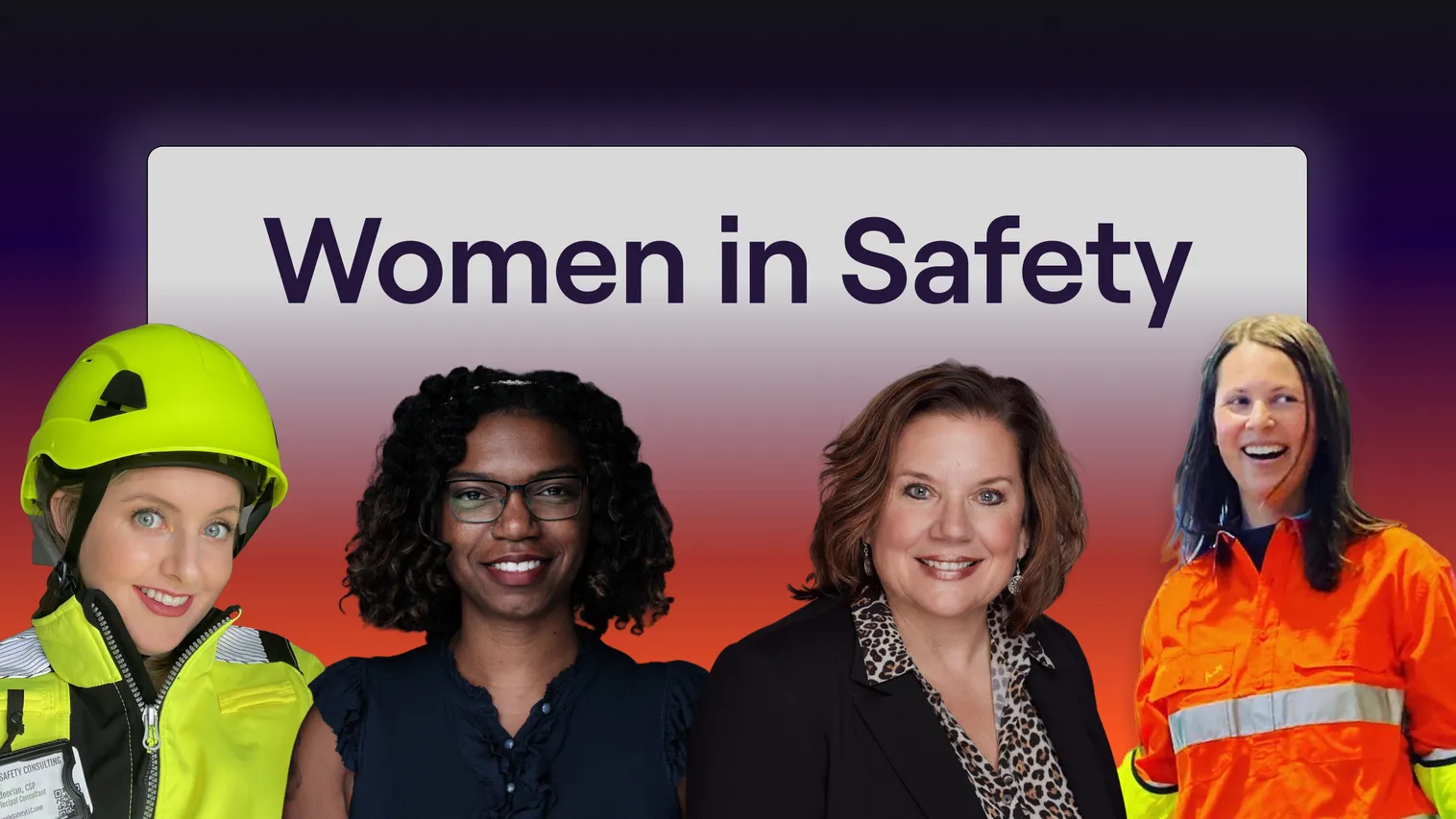


For this year’s Women’s History Month, we invited women leaders in EHS and operations to share their honest reflections on the realities of the profession, the challenges they’ve navigated, and the lessons they carry forward.
Their words speak for themselves.
When Safety Becomes Personal
Lisa Vanderhulst from Schwan’s reflects on the moments that redefine safety leadership and the responsibility that comes with shaping culture.
What’s a reality of working in EHS or safety that people outside the field often misunderstand?
One big reality of working in EHS and something most people outside the field don’t fully see is how much of the job is about influencing human behavior, not just enforcing rules. People often think safety is mostly about regulations, PPE, audits, and paperwork. And yes, those are important. But the “real work” of EHS looks more like:
You’re a change‑management leader, not a rule enforcer. Our work plays an important role in influencing human factors, culture, trust, and communication, which drives outcomes more than any standard.
1. Success often looks like “nothing happened,” which can be hard for others to value, but preventing something invisible doesn’t always get recognized. There are plenty of coaching conversations, hazards detected and corrected, process redesigns, and leading indicator work.
2. Safety isn’t the opposite of production—it is production done well. Outside EHS, people sometimes view safety measures as obstacles that slow work down. Inside the field, you learn that high reliability, efficiency, and quality improve when safety is built in, not bolted on.
3. EHS Leaders put a lot of work into building relationships. If front‑line employees, supervisors, or leadership don’t trust you, nothing moves. Credibility and empathy are often more important than technical expertise.
4. It’s emotionally heavy work. You carry the responsibility of preventing harm to people you know by name. Near misses, serious injuries, and investigations can take a real emotional toll—something people outside the field don’t always recognize.
5. Safety is rarely black‑and‑white. There are always gray areas, risk tradeoffs, operational constraints, human variability, and organizational pressures. The job is navigating these complexities without compromising people’s well‑being.
Has there been a moment in your career that changed how you think about safety, risk, or your role as a leader?
There are moments in an EHS career that stay with you. For me, it was the day we had a serious injury on-site. I remember standing in the aftermath, equipment quiet, people shaken, the air heavy with questions. In those moments, every procedure, policy, and KPI fades into the background. What remains is a person who got hurt at work, and the realization that they had trusted us to help keep them safe. That day changed how I think about safety, risk, and my role as a leader. I stopped looking at safety as something we manage and started seeing it as something we shape. Risk isn’t just a line in a JSA—it’s a reflection of the pressures, assumptions, shortcuts, and habits that build up over time. It’s influenced by culture, clarity, confidence, and sometimes even silence. I learned that real leadership in safety is not about enforcing rules, it’s about creating conditions where people can speak up, slow down, ask for help, and feel supported for doing the right thing even when it’s inconvenient. I also realized that the absence of incidents doesn’t mean safety exists in an organization. Most importantly, that day reinforced why EHS work matters. Behind every conversation, every uncomfortable question, and every improvement we push for, there’s a person, a family, a future you are impacting.
Serious incidents leave an indelible mark. If you work in EHS, you know these moments; they change you, and they sharpen your sense of purpose!
Finding Your Voice in Safety
Renita Stroupe, EHS Specialist at King’s Hawaiian, speaks to what it really takes to lead in safety, especially in environments where your voice isn’t always invited.
What’s the reality of working in EHS or safety that people outside the field often misunderstand?
Many assume EHS is only about enforcing rules and checking compliance boxes, when in reality it’s about influencing behavior, building trust, and supporting people so they can work safely. It’s far more collaborative and people‑centered and psychology based. Really understanding the "why" and making things relatable, not just enforceable.
What’s something you’ve had to learn or navigate as a woman in EHS that wasn’t part of the job description?
I’ve had to learn how to confidently assert my expertise in environments where safety perspectives aren’t always prioritized. Balancing professionalism with standing firm and being okay with not always getting the invite but making my presence known.
Has there been a moment in your career that changed how you think about safety, risk, or your role as a leader?
Yes—seeing how one small oversight can ripple into something serious shifted my mindset. It reinforced that safety leadership isn’t about checking boxes; it’s about being proactive, present, and willing to address concerns before they escalate.
When you see someone get a life changing injury, especially one that could have been easily prevented, if ANYONE would have stepped up as a leader, it's really difficult to watch people just keep running in the same vicious cycle. You have to sometimes be the voice for those who feel voiceless.
As a leader, I am geared toward solving problems before they every become one, even if I don't get the highlight reel at the end of the day.
What’s a challenge you’ve faced as a woman in EHS or operations that doesn’t get talked about enough?
The pressure to be both approachable and authoritative at the same time. It can take extra effort to establish credibility and the same sense of firmness while demonstrating care and collaboration. Many times, the same unwavering firmness can be seen in a negative view as male counterparts, just as leading with care can be seen as a 'feminine' trait instead of a people-centered approach. Being reliable and forthcoming and supporting people is not the same as coddling people and unfortunately sometimes that is the collective thought for safety especially as a woman in EHS facing operations that is predominantly male led.
Based on your experience, what advice would you give to women entering EHS or safety leadership today?
Trust your expertise, ask questions boldly, and build relationships across every level of the organization. Your voice matters—use it, even when it feels uncomfortable. Safety leadership is about influence, and authenticity is one of your strongest tools. Never apologize for being you.
Leading with Care
Abby Ferri, Director of Networks at the National Safety Council, reminds us that safety leadership begins with care and connection.
What’s a reality of working in EHS or safety that people outside the field often misunderstand?
The quote "Nobody cares how much you know, until they know how much you care" is a way of life in the EHS profession. The ability to genuinely convey concern and care for the workforce unlocks your ability to work collaboratively with the trades and other stakeholders in workplace safety. I've never portrayed grand gestures, it's just the little things of short connecting conversations adding up over time that show someone you genuinely care about their safety at work.
What’s something you’ve had to learn or navigate as a woman in EHS that wasn’t part of the job description?
Early in my career I felt I had to almost disappear by wearing the same jeans and boots as the guys on the jobsite. I didn't realize at the time how much that stifled my personality at work. At my first job straight out of college, I knew I couldn't come across as a know it all, so I always asked questions and provided follow up when questions were asked of me. Even though it felt like I was minimizing myself or my knowledge, it was a great way to get the workforce to open up to me about their jobs and what was lacking in safety. Following up with workers with options for better work gloves or safety glasses was the first light bulb moment for me - people loved that I listened and came back with answers. They couldn't wait to talk about the next thing.
Has there been a moment in your career that changed how you think about safety, risk, or your role as a leader?
I have a first half and "this half" of my career that are solidly divided around 2018 when I started advocating for the safety of women specifically in trades roles and advancing young women into STEM and EHS career paths. I was activated by strong and established women in safety like Kelly Bernish, Fay Feeney, Jennifer Zipeto, Karen Larue, Jo Pina, and Dr. Patricia Reed; and my momentum is boosted by women in the generation behind me and our allies who stand on the work of those established women and take it further like Lindsay Bell, Wyatt Bradbury, Subena Colligan, Bryce Griffler, Amy Roosa, Rachel Walla, Brandy Zadoorian, Allison Short, and Abby Holovach.
What’s a challenge you’ve faced as a woman in EHS or operations that doesn’t get talked about enough?
Sometimes, just being believed, whether it is about a situation you personally faced or are advocating for someone else about.
Based on your experience, what advice would you give to women entering EHS or safety leadership today?
It's a great time to be a woman in EHS, while there are still challenges, your perspective and approach are valued, welcomed, and necessary for the next generation workforce.
The Complexity Behind the Scenes
Brandy Zadoorian, CEO and Principal Consultant at Triangle Safety Consulting LLC, highlights the operational rigor that often goes unseen.
What’s a reality of working in EHS or safety that people outside the field often misunderstand?
One reality people outside of EHS often misunderstand is the sheer volume and complexity of what goes into maintaining an effective safety program. It involves creating and implementing written site-specific safety programs, developing and updating Lockout/Tagout procedures, conducting recurring training, performing audits and inspections, investigating incidents, tracking corrective actions, staying current with OSHA regulations, and documenting everything. A strong safety program is proactive, which requires consistent, organized, and detailed work.
Based on your experience, what advice would you give to women entering EHS or safety leadership today?
My advice to women entering EHS or safety leadership is to never stop learning and to be confident in your voice. Safety professionals have to speak up (sometimes in rooms where they’re the only woman), and your expertise deserves to be heard. That's why they hired you!
Also, don’t try to carry everything alone. Early in my career as an EHS Specialist, I experienced burnout because I felt like I had to handle every task myself, from conducting PPE hazard assessments to reviewing and updating periodic LOTO inspections. Looking back, I wish I had asked for help or brought in fractional support when needed. Strong leaders know when to collaborate and leverage resources. Asking for help isn’t a weakness; it’s strategic.
Leading Safety Forward
What stands out across these reflections is how personal this work is. Safety is not just policy or process. It’s the responsibility of protecting others in environments where the stakes are high and the pressure is real.
For many women in EHS and operations, that responsibility also comes with navigating spaces that have not always been built with them in mind. Earning credibility, speaking up, and leading with confidence in male-dominated environments takes resilience. And yet, they continue to show up, advocate, influence, and protect the people around them.
We’re grateful to the women who shared their experiences here, and to the many others doing this work every day. Happy International Women’s Day and Women’s History Month to all the women shaping safety, supporting others, and carrying this responsibility with strength and purpose.