A paper in Safety Science (Cooper et al., 2019) had a few findings that really stuck with me.
1. PSIFs behave like a real "serious potential" indicator, not just noise.
The researchers found a strong relationship between PSIFs and actual SIFs (Spearman Rho ≈ 0.80, one of the strongest correlations in their entire dataset). If you care about preventing life-altering events, PSIFs are a far better proxy than most people treat them as.
2. PSIF data can be more consistent than the metrics we obsess over.
In their dataset, PSIFs showed a reliability score of roughly 0.62. TRIR, first-aids, and near-misses all came in lower, in the 0.37 to 0.39 range. That's a big deal. If your metric is unstable, your decisions will be too, no matter how much you trust the number on the dashboard.
There's a second layer here worth calling out. When the researchers checked which categories showed signs of under-reporting, PSIFs came back clean. First-aids didn't. So PSIFs aren't just more reliable statistically, they also seem to reflect what's actually happening on the floor more.
3. PSIFs don't fit neatly into Heinrich's triangle, and that's the point.
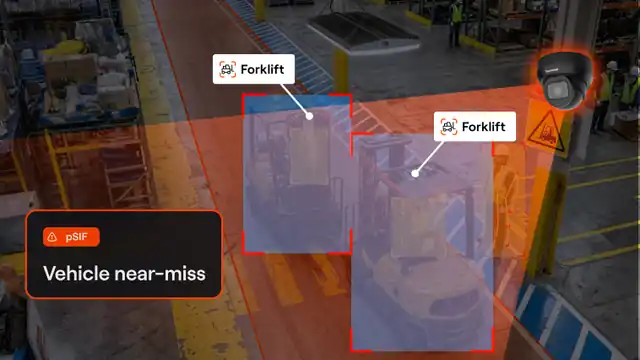
They're a distinct class: "near-miss with serious potential." In their ratios, PSIFs sat roughly around 16 PSIFs for every 1 SIF, and about 49 near-misses per PSIF. It's not just frequency, it's quality of risk. Most near-misses are noise. A PSIF is the near-miss that almost wasn't.
4. The strongest PSIF levers weren't slogans, they were capabilities and culture.
PSIFs were most associated with:
- Competency (training, readiness, skill)
- Culture of fear (blame or punishment dynamics)
- How well organizations monitor, measure, and reinforce safety
That last one showed up as the strongest predictor of all. Not posters. Not slogans. The actual discipline of monitoring, measuring, and reinforcing, paired with the stories people tell each other about what happened and why it mattered.
My takeaway
If your goal is fewer SIFs, PSIFs are one of the best leading indicators we have. But only if you treat them as first-class signals, and only if you invest in the conditions that reduce them: competency, psychological safety, and consistent monitoring.
Curious where you land on this: do you track PSIFs today? And do you trust the data enough to make decisions from it?