
Most enterprise safety programs improve incrementally, year over year. Incident rates come down. Corrective action closeout rates improve. Training completion goes up. These are real improvements — the result of dedicated EHS teams, management commitment, and genuine operational focus.
But there's a ceiling that most programs hit — a point at which the interventions that drove early improvement stop producing the same returns. Incident rates stop declining. SIF rates plateau. The program is well-run, but it's not getting materially better.
The reason, in most cases, is not effort. It's architecture.
How programs get stuck
Safety programs that operate on fragmented data can improve the components that are being tracked. They can't learn from the full picture, because the full picture was never connected in the first place.
A corrective action that works — that changes behavior and reduces alerts in a specific zone — is a data point. If that corrective action lives in a separate system, or gets closed out without being connected to the alert that prompted it and the trend data that followed, its value ends when the action closes. The next time a similar risk appears, the team starts from the same baseline.
This is the fundamental problem with siloed safety management: every intervention is essentially a one-time event. The institutional learning that should accumulate across interventions doesn't, because the systems don't connect.
What connected programs learn
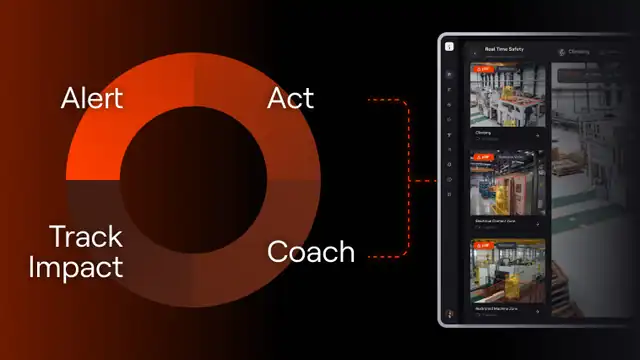
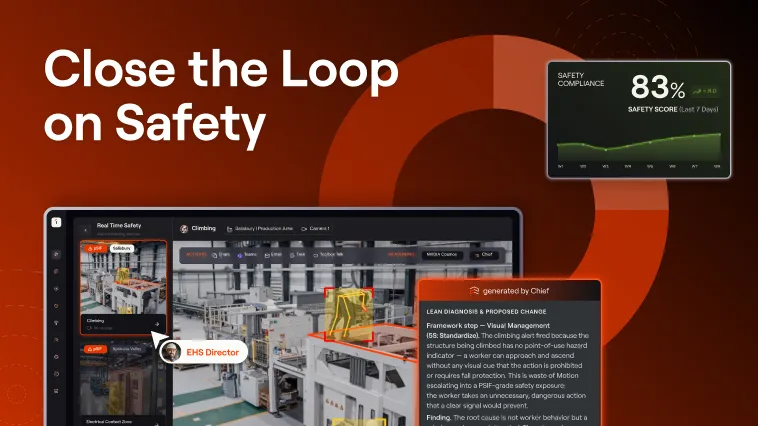
When alerts, corrective actions, coaching records, trend data, and facility-level safety scores all live in the same operational view — and when AI is applied to surface patterns in that data — safety programs start building compound institutional knowledge.
Every corrective action creates a record of what worked. The intervention that reduced vehicle-pedestrian alerts in a loading dock by 50% over two weeks is not just a resolved task. It's a data point about what kinds of interventions work for what kinds of risks in what kinds of zones. Over time, that library becomes a resource.
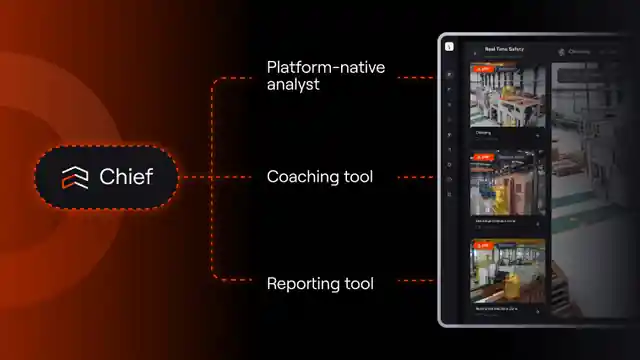
Chief, Intenseye's AI agent, can draw on that institutional record directly. What corrective actions have been most effective for ergonomic risks in packaging zones? Which coaching approaches have produced the clearest behavioral change for PPE compliance? How do safety scores in similar facilities typically respond after implementing a specific process change?
These aren't questions most EHS programs can answer from their current data. A connected platform, over time, can.
The compounding value of continuous ergonomics monitoring
Take ergonomics as one example of compounding program value. A quarterly assessment gives a snapshot. Continuous camera-based REBA/RULA scoring gives a persistent view of exposure across the facility.
After six months of continuous monitoring, a program has data on which camera zones drive the highest ergonomic exposure, which workers have the highest cumulative load, and which process changes have reduced musculoskeletal risk in specific areas. That data is not available from a traditional quarterly assessment — not because the assessments aren't valuable, but because they can't produce the sample volume needed to identify systemic patterns.
With that data, ergonomics program design becomes more targeted. Resources go toward the highest-exposure areas. Interventions get evaluated against actual trend data, not anecdotal observation. The program improves faster because the feedback loop is shorter.
The predictive layer
The furthest point on this arc is predictive risk — the ability to look at what's happening in a facility now and assess what's likely to happen next.
Intenseye's platform uses Nvidia Cosmos-powered predictive risk modeling to surface likely permutations of safety events before they occur. Rather than responding to risks that have materialized, EHS teams can see how current conditions are trending and where risk is building.
This capability is most useful for programs that have built a foundation of connected, historical data — because the predictive models are strongest when they can draw on a rich operational record. The investment in connected safety infrastructure compounds into a stronger predictive capability over time.
Where to start
Safety programs don't get built overnight, and they don't get smarter overnight. The compounding value of connected data takes time to accumulate. The right starting point is not designing the perfect long-term architecture — it's closing the most significant gaps in visibility and workflow today, with a platform that can support the program's growth as it matures.
The Control Room, Ergonomics, Visual Analytics, Chief, and the Insights module are each a starting point. Most teams begin with their highest-priority risk type and build from there. The program that gets smarter over time starts with the decision to connect the data.
See the full platform in the Console Dashboard walkthrough →